Architects of Modern Deterrence
In the high-stakes theater of global defense, Lockheed Martin stands as the titan of integrated systems. With a revenue exceeding $70 billion in 2025, the company has transformed from a traditional aircraft manufacturer into a software-defined defense architecture powerhouse. Their ability to deliver cutting-edge platforms under extreme geopolitical pressure is the benchmark for the modern industrial base.
For B2B leaders, the Lockheed Martin narrative is not just about military hardware. It is a masterclass in managing complex, multi-tier supply chains in an era of persistent uncertainty. Understanding how they navigate these challenges provides a roadmap for any industrial firm aiming to scale production while maintaining uncompromising quality standards.
The Engine of High-Volume Defense Production
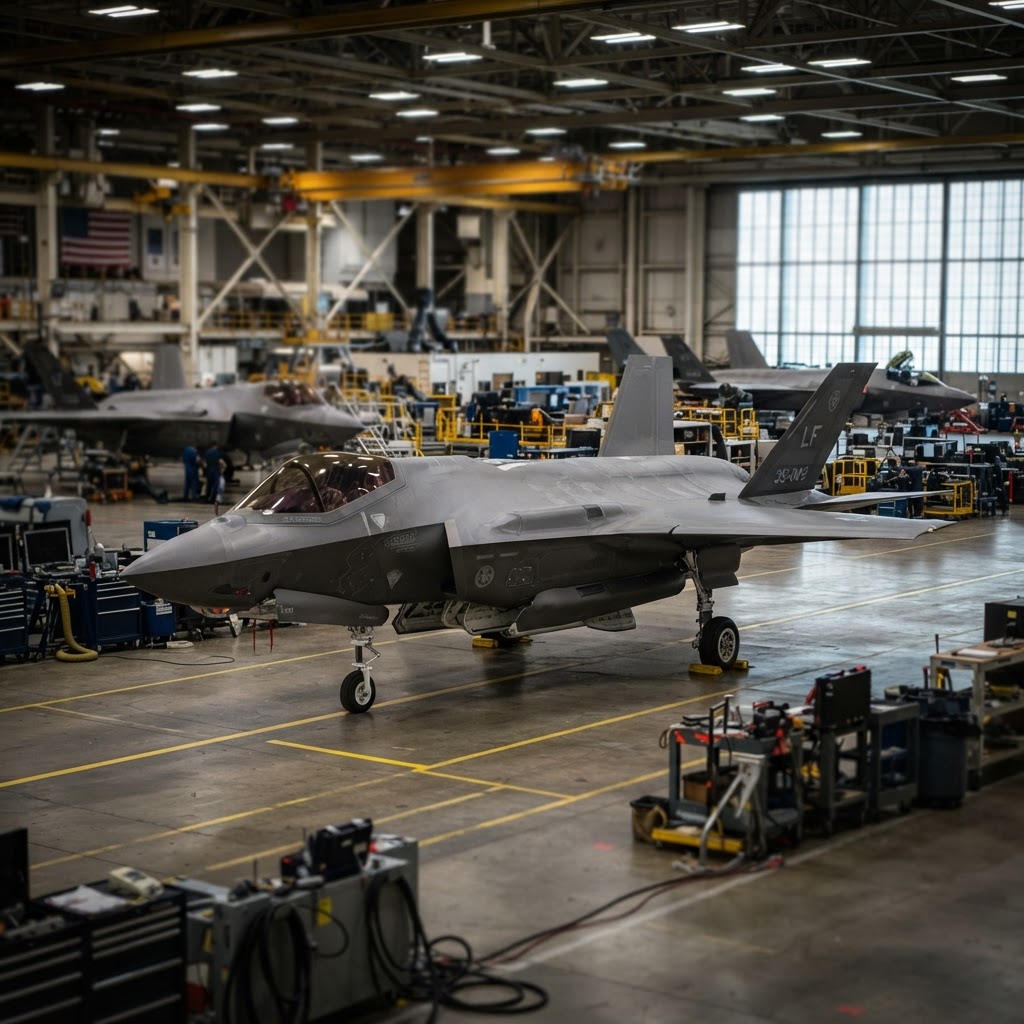
Lockheed Martin’s manufacturing capabilities have reached new heights in 2026, driven by a surge in demand for the F-35 Lightning II. The current production cadence has stabilized, with over 150 jets delivered annually across global customers. This output is supported by a sophisticated digital thread that connects tier-three suppliers directly to the final assembly line in Fort Worth.
Managing a fleet of thousands of active components requires more than human labor; it requires extreme synchronization. The company’s 2025 Annual Report highlights a 12% improvement in "touch labor" efficiency across the aeronautics sector. By implementing modular assembly techniques, Lockheed has reduced the manufacturing lifecycle of individual airframes by nearly 200 hours compared to 2024 benchmarks.
Inventory management has been overhauled to handle the volatility of the global semiconductor market. By maintaining a strategic reserve of critical electronics and specialized metals, the firm has mitigated the supply shocks that crippled competitors earlier in the decade. Their focus on "just-in-case" logistics ensures that production lines remain operational even during severe global supply chain disruptions.
The Digital Thread and Advanced Manufacturing Innovations
Innovation at Lockheed Martin in 2026 is synonymous with the "Digital Twin" ecosystem. Every F-35 produced now carries a virtual, real-time counterpart that tracks fatigue, component wear, and maintenance requirements across its entire operational life. This transition from reactive to predictive maintenance has increased fleet availability by 15% since early 2025.
Additive manufacturing has moved from prototyping to structural component integration. Lockheed’s 2026 manufacturing facilities now feature large-scale industrial 3D printers that produce titanium alloy structural nodes, reducing weight by 10% and parts count by 30% per aircraft wing section. This shift not only accelerates the assembly process but also significantly lowers fuel consumption for the end-user.
Artificial Intelligence is no longer just for flight controls; it is the backbone of the factory floor. Machine learning algorithms now monitor thousands of CNC milling operations in real-time, adjusting tool paths to prevent tool breakage and ensure sub-micron precision. This level of autonomy has reduced scrap rates by 22% within their primary weapons systems divisions over the last twelve months.
Growth Lessons for the Industrial Sector
Lockheed Martin demonstrates that industrial growth in 2026 requires a radical commitment to transparency. Their B2B strategy emphasizes "Total Systems Value," where the selling point is not just the hardware, but the lifetime support, training, and software ecosystem provided alongside the product. This creates a recurring revenue stream that insulates the company from the cyclical nature of government defense budgets.
Strategic partnerships are the second pillar of their growth. Lockheed increasingly acts as a systems integrator rather than a sole-source manufacturer, curating a network of specialized SMEs to provide niche subsystems. For other industrial manufacturers, this emphasizes the importance of building a robust, agile ecosystem rather than attempting to build every component in-house.
Finally, the company’s investment in workforce development is a critical lesson. By partnering with technical colleges and regional training centers, they have secured a steady pipeline of specialized labor. For B2B firms facing the current skilled labor shortage, the takeaway is clear: you must build the talent pipeline you need, as it will not appear on the open market in sufficient numbers.
The Strategic Outlook for 2027 and Beyond
As we look toward 2027, the focus for Lockheed Martin is the integration of autonomous "loyal wingman" drones into existing manned platforms. This evolution will require a shift in production facilities to handle swarm robotics and modular payloads. The industrial implication is a move toward more agile, software-defined factories that can be reconfigured in weeks rather than years.
Geopolitical shifts are pushing for regionalized supply chains, and Lockheed is ahead of the curve. By diversifying their manufacturing hubs across key allied nations, they are mitigating the risk of logistics bottlenecks while deepening international political commitments. Industrial leaders should evaluate their own global footprint to determine if regionalization could offer a competitive edge in resilience.
To compete in this new industrial era, firms must embrace the "connected factory" model immediately. Do not wait for legacy systems to fail; start digitizing your shop floor today to ensure your supply chain remains transparent and agile. If your firm is ready to scale, contact our strategy team to discuss how to implement these enterprise-level manufacturing principles within your organization.
Key Takeaways
- Lockheed Martin achieved a 12% improvement in aeronautics manufacturing efficiency during 2025 through advanced digital thread integration.
- The deployment of large-scale additive manufacturing has reduced structural parts counts by 30% on critical weapons systems platforms in 2026.
- Real-time AI monitoring of factory CNC equipment has resulted in a 22% reduction in scrap rates over the last year.
- Predictive maintenance enabled by digital twins has improved global fleet availability by 15% since 2025.
Key Quotes
"We are no longer just building machines; we are orchestrating complex, intelligent ecosystems that evolve long after they leave our assembly lines." — Jim Taiclet, CEO of Lockheed Martin
"Digital transformation is the only way to manage the dual pressure of increased production volumes and heightened geopolitical volatility." — Maria Demaree, VP of Mission Systems at Lockheed Martin
References
- Lockheed Martin 2025 Annual Report — Detailed breakdown of revenue, production milestones, and strategic growth sectors.
- Defense News 2026 Outlook — Industry analysis regarding global defense manufacturing shifts and supply chain resilience.
- Aviation Week Intelligence — Data on F-35 fleet availability, maintenance cycles, and digital twin technology application.