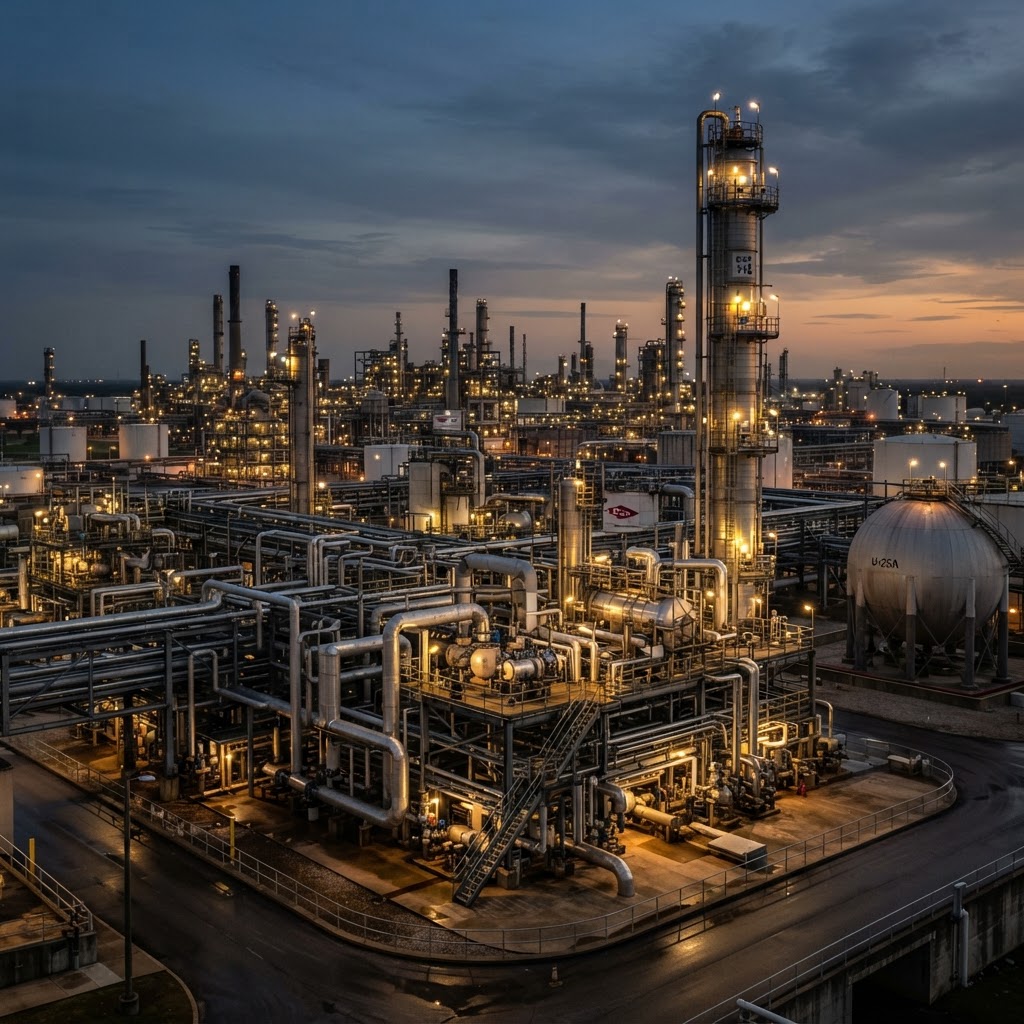
The Chemistry of Change: Why Dow Is the Industrial Story of the Decade
In a global manufacturing landscape increasingly defined by sustainability mandates and supply chain complexity, Dow Inc. stands out as one of the most ambitious and strategically positioned chemical companies on earth. With operations spanning more than 31 countries and a product portfolio touching everything from packaging films to automotive coatings, Dow is not simply a chemical manufacturer. It is a materials intelligence company operating at planetary scale.
The company's Path2Zero decarbonization initiative has become a reference point for industrial leaders wrestling with how to balance emissions reduction with production growth. Rather than treating sustainability as a compliance exercise, Dow has embedded net-zero ambitions directly into its capital investment strategy. This approach is generating lessons that extend well beyond the chemical sector.
For B2B marketers, procurement leaders, and operations executives in manufacturing and industrial sectors, Dow's trajectory offers a rare combination of scale, data, and strategic clarity. Understanding how Dow is evolving its manufacturing model is not just interesting. It is essential competitive intelligence.
Scale, Revenue, and the Operational Footprint Behind Dow's Market Position
Dow reported net sales of approximately 43 billion dollars in its 2024 annual results, a figure that reflects both its geographic reach and the breadth of its end markets. The company serves customers across packaging, infrastructure, consumer care, and mobility sectors, with manufacturing assets that include more than 100 integrated production sites worldwide. This level of vertical integration gives Dow structural advantages that smaller specialty chemical players cannot easily replicate.
The company's Packaging and Specialty Plastics segment remains its largest revenue contributor, accounting for roughly 45 percent of total net sales in 2024. Production volumes in this segment run into millions of metric tons annually, with polyethylene being the single largest product family by volume. Dow's crackers and derivative units in the United States Gulf Coast corridor represent some of the most cost-efficient ethylene production capacity in the world.
Dow's Performance Materials and Coatings segment, while smaller in revenue contribution, commands premium margins due to the engineered nature of its silicone and coating chemistries. In 2024, this segment continued to benefit from demand in electric vehicle battery systems and construction weatherproofing applications. The diversification of end markets provides Dow with a natural hedge against cyclical downturns in any single industry.
Capital expenditure at Dow has remained disciplined but substantial. The company allocated approximately 2 billion dollars in capex during 2024, with a significant portion directed toward reliability improvements and low-carbon technology pilots. This level of investment signals long-term confidence in its manufacturing assets even as it prepares for a structural shift in how those assets operate.
Path2Zero: The Engineering and Technology Architecture of Dow's Decarbonization Bet
Path2Zero is Dow's flagship program to build the world's first net-zero carbon emissions ethylene and derivatives complex. The site selected for this transformation is Dow's Fort Saskatchewan facility in Alberta, Canada. When complete, this complex is expected to produce approximately 3.2 million metric tons of ethylene and downstream derivatives per year while generating zero Scope 1 and Scope 2 emissions.
No chemical company has attempted this at this scale.
The technical foundation of Path2Zero rests on a combination of carbon capture and storage technology, fuel switching from natural gas to lower-carbon hydrogen, and process electrification where economically viable. Dow has partnered with the Alberta Carbon Trunk Line system to transport captured CO2 to permanent geological storage sites. The integration of CCS into a live cracker operation represents a genuine engineering frontier, not a theoretical exercise.
Dow has estimated the total capital investment required for Path2Zero at approximately 6 billion dollars across the full project lifecycle. The company has been deliberate about staging this investment, with final investment decisions tied to policy support, carbon pricing trajectory in Canada, and technology readiness milestones. In 2024, Dow continued advancing front-end engineering and design work, keeping the project on a development timeline targeting initial mechanical completion in the late 2020s.
Beyond Fort Saskatchewan, Dow is pursuing incremental decarbonization across its global network through what it calls its 2030 carbon intensity reduction targets. The company has committed to reducing its net annual carbon emissions by 5 million metric tons by 2030 compared to its 2024 baseline. This requires deploying renewable energy procurement, feedstock flexibility projects, and operational efficiency programs across dozens of sites simultaneously.
The complexity of this coordination effort is itself a competitive differentiator.
What Dow's Strategy Teaches Industrial B2B Companies About Marketing Through Transformation
Dow's approach to communicating Path2Zero offers a masterclass in industrial B2B brand positioning. Rather than leading with aspirational language about a green future, Dow leads with engineering specificity. Every public communication about Path2Zero references specific sites, specific technologies, and specific capital figures.
This specificity builds credibility with procurement officers and sustainability directors who have grown skeptical of vague net-zero pledges.
For industrial companies seeking to differentiate on sustainability, the lesson is clear: data density is a form of trust. When Dow states that Fort Saskatchewan will capture and store CO2 using geological formations that have held hydrocarbons for millions of years, it is not just communicating environmental benefit. It is communicating geological and engineering rigor.
That kind of detail converts skeptics into buyers.
Dow also structures its sustainability narrative around customer value rather than corporate virtue. The company consistently frames low-carbon materials as enabling customer decarbonization goals, particularly for automotive OEMs, consumer goods companies, and infrastructure developers with their own Scope 3 reduction commitments. This positions Dow not as a supplier seeking credit for green investments but as a value chain partner enabling customers to hit their own targets.
For B2B marketers in manufacturing, this reframing is powerful. If your company is investing in cleaner production, the most effective marketing move is not to advertise your emissions reductions. It is to quantify how your cleaner production helps your customers reduce their emissions.
That is the message that wins contracts and builds long-term account loyalty. If your organization has not yet mapped how your sustainability investments translate into customer Scope 3 benefits, that work should begin immediately.
The Road Ahead: Strategic Implications for Dow and the Industrial Sector
Dow's Path2Zero program is not an isolated experiment. It is the leading edge of a broader transformation in how capital-intensive manufacturers will need to operate as carbon pricing mechanisms expand globally. The European Union's Carbon Border Adjustment Mechanism, which began its transitional phase in 2024, is creating direct cost implications for chemical imports that do not meet emissions benchmarks.
Dow's investments position it to serve European customers without penalty exposure that competitors may face.
The competitive implications extend to talent and partnerships as well. Dow's visible commitment to decarbonization technology has made it a preferred partner for energy companies, technology developers, and engineering firms seeking to pilot CCS and hydrogen integration at industrial scale. This partnership ecosystem creates compounding advantages that are difficult for competitors to replicate quickly.
By 2026, Dow has established collaborative agreements with multiple clean energy infrastructure developers across North America and Europe.
For the broader industrial manufacturing sector, Dow's trajectory signals that the era of treating sustainability investment as separate from core capex planning is ending. Companies that integrate decarbonization roadmaps into their five and ten year asset investment plans will be better positioned to access green financing instruments, win sustainability-linked procurement contracts, and absorb regulatory costs that are only likely to increase. The cost of inaction is rising faster than the cost of investment.
The strategic question for manufacturing executives is not whether to pursue a Path2Zero-style transformation. It is how to sequence the investment, build the partnerships, and communicate the progress in ways that generate commercial return alongside environmental benefit. Dow's playbook, built on engineering credibility, customer value framing, and staged capital commitment, offers a replicable model.
Industrial leaders who study it carefully and begin adapting it to their own operations will be the ones setting the competitive standard in their sectors over the next decade.
Key Takeaways
- Dow reported net sales of approximately 43 billion dollars in 2024, with Packaging and Specialty Plastics accounting for roughly 45 percent of total revenue, demonstrating the scale at which its decarbonization investments must operate.
- The Path2Zero complex at Fort Saskatchewan is designed to produce approximately 3.2 million metric tons of ethylene and derivatives annually at net-zero Scope 1 and Scope 2 emissions, representing an unprecedented scale of low-carbon chemical production.
- Dow has committed to reducing net annual carbon emissions by 5 million metric tons by 2030 compared to its 2024 baseline, requiring coordinated action across more than 100 production sites worldwide.
- The total estimated capital investment for Path2Zero is approximately 6 billion dollars, reflecting the financial commitment required to retrofit a world-scale cracker complex for net-zero operations.
Key Quotes
"Path2Zero is about building the most cost-competitive and lowest-carbon footprint ethylene and derivatives complex in the world. It is not just about decarbonization. It is about winning in the marketplace." — Jim Fitterling, Chairman and CEO, Dow Inc.
"The transition to a low-carbon economy is creating new demand signals across every end market we serve. Our job is to make sure Dow's materials are at the center of that transition." — Karen Carter, Chief Human Resources and Inclusion Officer, Dow Inc.
References
- Dow Inc. 2024 Annual Report — covers full-year 2024 financial results, segment performance, and capital allocation priorities
- Dow Path2Zero Program Overview — official program page detailing the Fort Saskatchewan net-zero complex, CCS partnerships, and investment timeline
- Canada's Carbon Capture and Storage Policy Framework — Natural Resources Canada resource covering CCS regulatory and infrastructure context relevant to Dow's Alberta investments