NEWS
Moog Opens $150M Advanced Manufacturing Facility in New York — Construction OwnersAmazon to invest $100M in new Indiana manufacturing facility — The Robot ReportGoan firm, German ship designer join hands to develop Indian cargo vessels — Economic Times Manufacturing2026 State of Smart Manufacturing Report — AgilixThe State of Manufacturing 2026: AI Adoption Trends — Parsec CorpState Law Banning PFAS Labeling Requirements Delayed — Manufacturing Dive2026 State of Smart Manufacturing Report: Digital Transformation Execution — Rockwell Automation / AgilixTongtai Doubles Semiconductor Orders on AI Data-Center Demand — DIGITIMES2026 State of Smart Manufacturing Report: From Experimentation to Execution — Rockwell Automation / AgilixManufacturing Technology - Sep 25th, 2026 — IndustryWeekGMP Requirements for Pharmaceutical Manufacturing — PharmaAccessSiemens launches fresh AI reinvention drive to boost returns — The Economic TimesMoog Opens $150M Advanced Manufacturing Facility in New York — Construction OwnersAmazon to invest $100M in new Indiana manufacturing facility — The Robot ReportGoan firm, German ship designer join hands to develop Indian cargo vessels — Economic Times Manufacturing2026 State of Smart Manufacturing Report — AgilixThe State of Manufacturing 2026: AI Adoption Trends — Parsec CorpState Law Banning PFAS Labeling Requirements Delayed — Manufacturing Dive2026 State of Smart Manufacturing Report: Digital Transformation Execution — Rockwell Automation / AgilixTongtai Doubles Semiconductor Orders on AI Data-Center Demand — DIGITIMES2026 State of Smart Manufacturing Report: From Experimentation to Execution — Rockwell Automation / AgilixManufacturing Technology - Sep 25th, 2026 — IndustryWeekGMP Requirements for Pharmaceutical Manufacturing — PharmaAccessSiemens launches fresh AI reinvention drive to boost returns — The Economic Times
Report

Silicon Sovereignty: How TSMC's Arizona Fab Build-Out Is Rewriting the Rules of Advanced Foundry Manufacturing

How TSMC's $65B Arizona fab build-out and 2nm process leadership are rewriting advanced foundry manufacturing and offering lessons for industrial B2B companies.

Manufacturing UltraSeptember 28, 20266 min read
Silicon Sovereignty: How TSMC's Arizona Fab Build-Out Is Rewriting the Rules of Advanced Foundry Manufacturing

At a Glance

AI Summary

How TSMC's $65B Arizona fab build-out and 2nm process leadership are rewriting advanced foundry manufacturing and offering lessons for industrial B2B companies.

Manufacturing UltraSep 28, 20266 min read

Key Takeaways

  • TSMC reported 2025 annual revenue of approximately $88.9 billion, a 34% year-over-year increase driven by AI and HPC chip demand.

The Wafer at the Center of the World

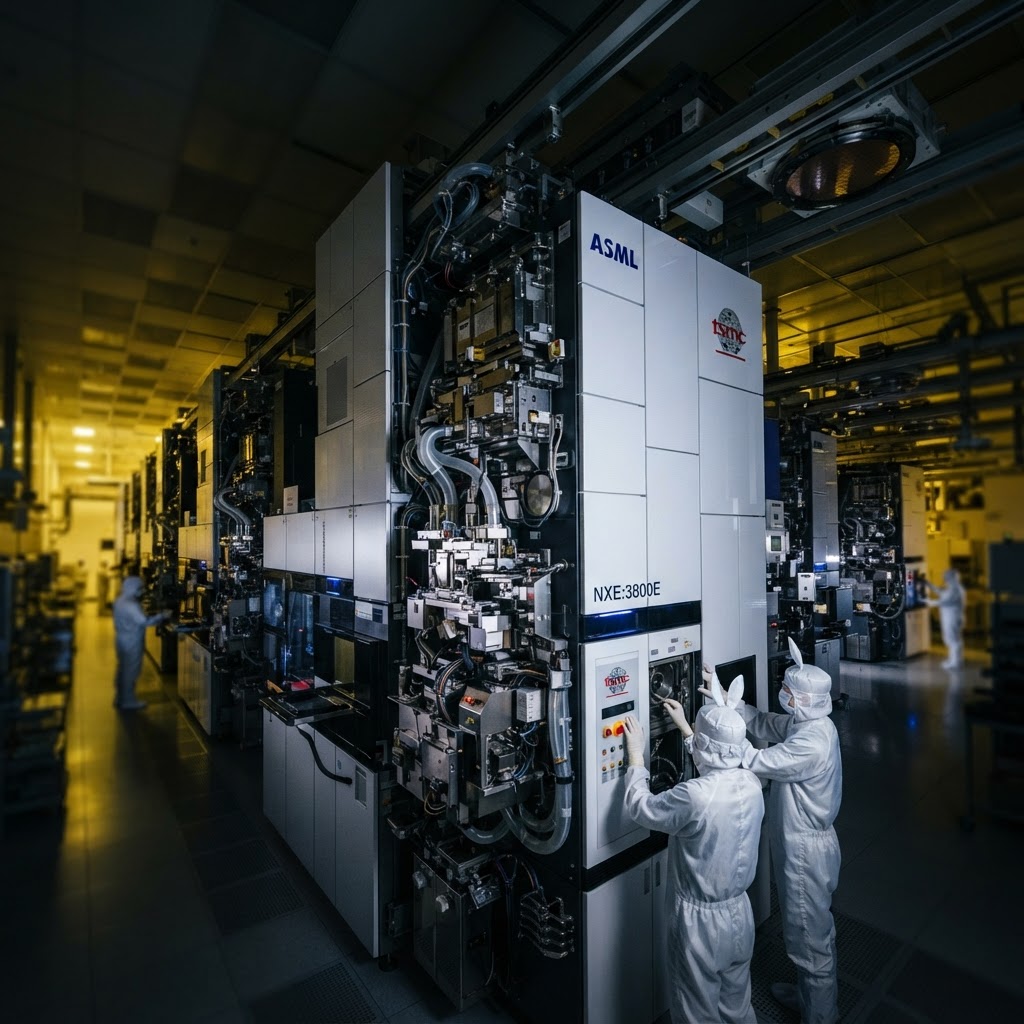
Every advanced smartphone, AI accelerator, and data center processor in existence today traces its origins back to a single source: Taiwan Semiconductor Manufacturing Company. TSMC controls roughly 90% of the world's most advanced chip fabrication capacity, making it the most strategically important manufacturer on the planet. No other industrial company commands this level of technological leverage across so many critical global supply chains.

In 2025, TSMC reported annual revenue of approximately $88.9 billion USD, a year-over-year increase of nearly 34% driven by surging demand for AI and high-performance computing chips. That figure places TSMC firmly among the world's most valuable manufacturing enterprises. For industrial and B2B executives, TSMC's trajectory offers lessons that extend far beyond semiconductors.

The company's decision to build advanced fabs in Phoenix, Arizona represents one of the largest foreign direct investments in American manufacturing history. With over $65 billion committed to the Arizona expansion, TSMC is not simply building factories. It is repositioning the entire global foundry ecosystem.

The Scale and Precision of TSMC's Global Operations

TSMC operates over a dozen 300mm wafer fabrication facilities globally, producing chips for more than 500 customers across 30 industries. In 2025, the company's capital expenditure budget reached approximately $38 to $42 billion, with the majority directed toward leading-edge process nodes at 3nm and below. This level of sustained reinvestment is virtually unmatched in global manufacturing.

The Arizona Fab 21 complex is central to TSMC's U.S. strategy. Phase 1, producing 4nm chips, began volume production in early 2025 following a delayed but successful ramp-up. Phase 2, targeting 2nm process technology, is scheduled to reach production readiness by 2028. A third phase focusing on sub-2nm nodes was announced in 2025, bringing the total Arizona investment to over $65 billion.

TSMC's gross margin in 2025 hovered near 53 to 55%, a figure that reflects the premium customers pay for cutting-edge process nodes. Apple alone accounts for roughly 25% of TSMC's annual revenue, followed by NVIDIA, AMD, and Qualcomm as major fabless clients. This customer concentration underscores the extraordinary trust that world-class technology companies place in TSMC's manufacturing reliability.

The Arizona campus will eventually employ more than 6,000 direct high-tech workers, with thousands of additional indirect jobs created across the regional supply chain. TSMC has also committed to workforce development partnerships with Arizona State University and local community colleges to build a domestic semiconductor talent pipeline.

Leading-Edge Process Innovation and the 2nm Frontier

TSMC's competitive moat is built on its relentless advancement through process node generations. The company's N3E (3nm Enhanced) node entered high-volume production in 2024, delivering approximately 18% performance improvement and 32% power reduction compared to the prior N5 generation. These figures matter enormously to customers designing AI chips and mobile processors where power efficiency is a key differentiator.

The upcoming N2 (2nm) node, based on Gate-All-Around (GAA) nanosheet transistor architecture, represents the most significant structural change in transistor design in over a decade. TSMC's N2 process is expected to deliver up to 15% speed improvement and 25 to 30% power reduction versus N3E at equivalent transistor density. Risk production of N2 began in late 2025 ahead of volume ramp in 2026.

CoWoS (Chip-on-Wafer-on-Substrate) advanced packaging has become one of TSMC's fastest-growing revenue segments, fueled by demand from AI chip designers who stack HBM memory alongside logic dies. TSMC expanded CoWoS capacity by more than 150% in 2025 to address persistent supply shortages driven by hyperscaler AI infrastructure buildouts. Advanced packaging revenue now represents a double-digit percentage of total company revenue.

TSMC's R&D expenditure in 2025 exceeded $6 billion, representing roughly 7% of total revenue. This sustained investment ensures the company maintains a process technology lead of approximately two to three years over its closest competitors. For B2B manufacturers in other sectors, TSMC's R&D intensity sets a benchmark for what it means to defend a technological leadership position through capital and innovation discipline.

Growth and Marketing Lessons for Industrial Manufacturers

TSMC does not compete on price. It competes on capability, reliability, and yield. This is a critical lesson for any industrial company seeking to escape commoditization: when your process is genuinely differentiated, customers pay premium prices and accept long-term supply agreements on your terms.

TSMC's average selling price per wafer has increased steadily even as global chip demand fluctuates.

TSMC's customer engagement model is built around deep co-development relationships rather than transactional sales. Fabless chip designers send engineering teams to TSMC's process development centers months or years before a product launch. This collaborative intimacy creates switching costs that no competitor can easily replicate.

Industrial manufacturers should consider how to build analogous co-development partnerships with their key accounts.

Geographic expansion, in TSMC's case into Arizona, Japan, and Germany, is being used as both a growth strategy and a demand generation tool. Customers who face political or supply chain pressure to source from multiple regions are being handed a compelling reason to deepen their TSMC relationship rather than diversify away from it. Expansion becomes a retention and acquisition mechanism simultaneously.

For manufacturing and industrial companies competing for long-term contracts, the TSMC model suggests a clear strategic imperative: invest in the capabilities your best customers will need in five years, not just the products they are buying today. Companies that lead on technology roadmaps earn the right to grow with their customers over time. If your organization is ready to rethink its own technology investment strategy, now is the time to benchmark against the world's most disciplined manufacturer.

The Capacity Imperative — Defense manufacturing cover
Free Industry Report

The Capacity Imperative

U.S. Advanced Manufacturing in 2027

The Strategic Outlook: Sovereignty, Supply Chain, and the Next Decade

The geopolitical dimension of TSMC's Arizona investment cannot be separated from its commercial logic. The U.S. CHIPS and Science Act has provided TSMC with approximately $6.6 billion in direct grants and access to significant loan guarantees to support the Arizona expansion.

This public-private partnership model is reshaping how advanced manufacturing capacity gets built and financed across the globe.

TSMC is simultaneously building fabs in Kumamoto, Japan (in partnership with Sony and Denso) and in Dresden, Germany (in partnership with Bosch, Infineon, and NXP). These facilities are not at leading-edge nodes but serve critical automotive and industrial semiconductor markets. By 2026, TSMC's geographic diversification will span three continents with localized supply chains serving regional customers.

AI compute demand remains the single most powerful demand driver in TSMC's order book. NVIDIA's Blackwell GPU architecture and its successors are manufactured exclusively at TSMC. As hyperscalers including Microsoft, Google, and Amazon continue to build custom AI silicon, TSMC's advanced node capacity is expected to remain sold out well into the late 2020s.

Analysts at firms including Morgan Stanley projected in 2025 that TSMC's revenue could reach $120 billion by 2027.

For industrial companies watching this transformation, the strategic implication is clear: the manufacturers who will define the next decade are those who invest in process leadership today, build geographically resilient production networks, and align their capabilities with the technology trends driving their customers' growth. TSMC is not simply a chip manufacturer. It is a blueprint for industrial dominance in a world where technology and geopolitics are inseparable.

Key Takeaways

  • TSMC reported 2025 annual revenue of approximately $88.9 billion, a 34% year-over-year increase driven by AI and HPC chip demand.
  • The Arizona Fab 21 investment has grown to over $65 billion across three planned phases, making it one of the largest foreign direct manufacturing investments in U.S. history.
  • TSMC's N2 (2nm) GAA process node is expected to deliver up to 30% power reduction versus N3E, entering volume production in 2026.
  • TSMC's 2025 R&D expenditure exceeded $6 billion, maintaining a process technology lead of approximately two to three years over nearest competitors.

Key Quotes

"We are committed to being a trusted technology and capacity provider for the global semiconductor industry, and our Arizona investment reflects that long-term commitment." — C.C. Wei, CEO, TSMC

"The CHIPS Act is about more than subsidies. It is about rebuilding the industrial base that American technological leadership depends on." — Gina Raimondo, Former U.S. Secretary of Commerce

References

The Capacity Imperative — Defense manufacturing cover
Free Industry Report

The Capacity Imperative

U.S. Advanced Manufacturing in 2027

Newsletter

Stay in the loop

Get the latest insights on manufacturing marketing, industrial trends, and growth strategies delivered to your inbox.

We'll send you industry insights and manufacturing trends. No spam, unsubscribe anytime.

A massive modern industrial robot arm in a sleek manufacturing facility
Manufacturing Ultra

Marketing for the industrial economy. We help manufacturers, suppliers, and event organizers grow with modern, data-driven programs.

Explore

© 2026 Manufacturing Ultra. All rights reserved.