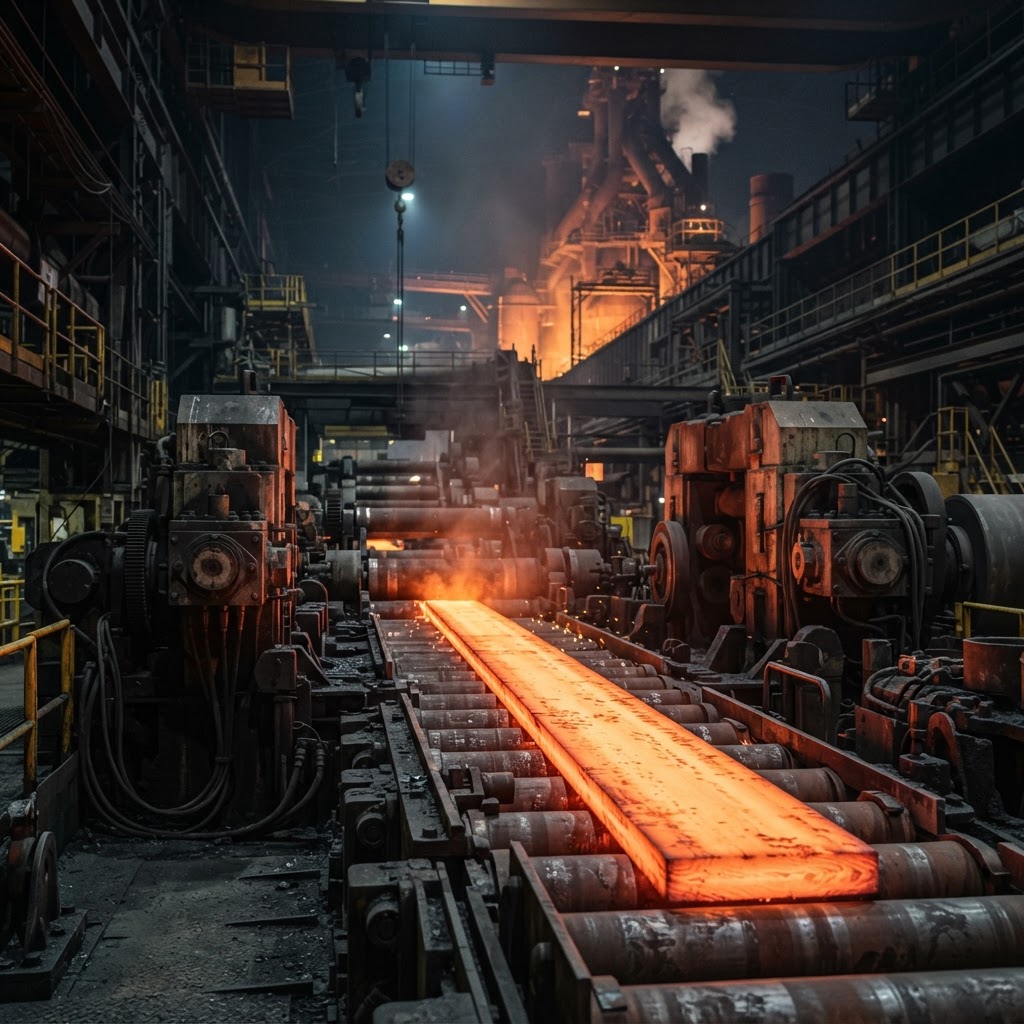
The Vertical Vision Reshaping American Steel
In an era when most industrial companies are outsourcing and specializing, Cleveland-Cliffs is moving in the opposite direction. The company has doubled down on owning every step of the steelmaking process, from iron ore mining in Minnesota's Iron Range to finished automotive steel rolling in the Midwest. That integrated bet is now at the center of a major capital investment story that every manufacturing and industrial executive should understand.
Cleveland-Cliffs has grown from a legacy iron ore pellet producer into the largest flat-rolled steel manufacturer in North America. Its acquisitions of AK Steel and ArcelorMittal USA created a vertically integrated powerhouse with annual raw steel production capacity exceeding 20 million net tons. The company serves automotive, construction, packaging, and appliance markets from a network of facilities spanning more than a dozen states.
The company's decision to invest in a direct-reduced iron (DRI) plant is the next chapter in that integration story. It signals a clear strategic philosophy: control your inputs, control your margins, and position yourself ahead of decarbonization mandates that are reshaping the entire steel value chain.
Cleveland-Cliffs' Manufacturing Operations: Scale, Scope, and Market Position
Cleveland-Cliffs reported net revenue of approximately 19.2 billion dollars in its 2024 annual results. While softer steel pricing weighed on margins compared to prior peak years, the company maintained its position as the dominant domestic supplier of automotive-grade steel. Its customer base includes nearly every major vehicle assembler operating in North America, giving it unusual pricing stability relative to commodity-exposed peers.
The company operates blast furnace and basic oxygen furnace (BOF) steelmaking at multiple integrated mills, including facilities in Indiana Harbor, Burns Harbor, and Middletown. These plants collectively produce a wide range of flat-rolled products including hot-rolled, cold-rolled, and coated steels. Cleveland-Cliffs also operates the largest electric arc furnace (EAF) steelmaking footprint among integrated producers, a hybrid model that gives it flexibility competitors lack.
On the mining side, Cleveland-Cliffs controls six iron ore mines and four pellet plants in Michigan and Minnesota, producing roughly 28 million long tons of iron ore pellets annually. This upstream ownership is a structural cost advantage that pure scrap-based EAF producers cannot replicate. When iron ore prices move, Cleveland-Cliffs captures the benefit internally rather than paying it to a third-party supplier.
The company's workforce exceeds 27,000 employees, the majority represented by the United Steelworkers union. Labor relations have been a strategic priority, with the 2024 contract cycle resulting in agreements that provided wage increases while preserving operational flexibility at key facilities. Workforce stability directly supports production reliability, which is a critical metric for just-in-time automotive supply chains.
The DRI Plant Investment: Process Innovation at Industrial Scale
The centerpiece of Cleveland-Cliffs' forward capital strategy is its planned direct-reduced iron facility, designed to produce a premium iron feedstock from iron ore pellets using natural gas rather than coking coal. DRI, sometimes called sponge iron, is a high-purity iron product that dramatically improves EAF steelmaking efficiency and product quality. The investment positions Cleveland-Cliffs to reduce its dependence on scrap metal markets while also lowering carbon intensity per ton of steel produced.
The proposed DRI plant, announced with a capital commitment in the range of 1 billion dollars, is expected to produce approximately 2.5 million metric tons of DRI annually. That output would feed Cleveland-Cliffs' existing EAF capacity, displacing purchased scrap and improving the metallurgical consistency of its steel. For automotive customers who require tightly controlled chemistry in advanced high-strength steels, this feedstock upgrade is commercially meaningful, not just an environmental talking point.
From a process standpoint, DRI production using the MIDREX shaft furnace technology reduces CO2 emissions by roughly 40 percent compared to traditional blast furnace ironmaking. Cleveland-Cliffs has also indicated that the DRI facility is designed to be hydrogen-ready, meaning the reducing gas can be switched from natural gas to green hydrogen as that fuel becomes cost-competitive. That optionality future-proofs the investment against tightening carbon regulations without requiring a complete rebuild of the facility.
The DRI investment also addresses a structural vulnerability in scrap-based steelmaking: scrap quality and availability are cyclical and regional. By producing its own virgin iron units, Cleveland-Cliffs insulates its EAF operations from scrap price spikes and contamination issues that degrade product quality. This is a technically sophisticated solution to a supply chain problem that has constrained EAF producers for decades.
Marketing and Growth Lessons for Industrial Companies
Cleveland-Cliffs' go-to-market strategy offers a clear lesson for industrial B2B companies: vertical integration is a marketing asset, not just an operational one. When the company tells an automotive OEM that it controls the iron ore, the pellet, the hot metal, and the finished coil, it is offering something no distributor or trading company can match. That story of supply chain certainty is a differentiated value proposition in a world still scarred by 2024 logistics disruptions and material shortages.
The company has invested heavily in co-engineering relationships with automotive customers. Rather than selling steel as a commodity, Cleveland-Cliffs positions its technical teams alongside OEM metallurgists during vehicle platform development. This consultative model creates switching costs that go far beyond price.
By the time a new vehicle program launches, the steel specifications are often written around Cleveland-Cliffs' specific product capabilities.
For other industrial manufacturers watching this playbook, the message is clear: own the narrative around your process, not just your product. Cleveland-Cliffs does not simply market steel. It markets supply chain security, metallurgical precision, and decarbonization progress.
Each of those themes speaks directly to the procurement and sustainability concerns of its largest customers in 2025 and 2026.
If your company is competing in a commoditized industrial segment, consider how deeper integration, whether upstream into materials or downstream into service, can reposition your offering. The DRI investment gives Cleveland-Cliffs a new chapter to tell in every customer conversation. Ask yourself what your company's equivalent chapter looks like, and start building it now.
Future Outlook: Decarbonization, Reshoring, and the Next Steel Cycle
The policy environment in 2025 and 2026 is broadly favorable for domestic integrated steel producers. Section 232 tariffs on imported steel remain in place, and bipartisan support for reshoring critical manufacturing has translated into procurement preferences for domestically produced materials in infrastructure and defense programs. Cleveland-Cliffs is well-positioned to capture a disproportionate share of that demand given its scale and geographic footprint.
Decarbonization is the defining strategic pressure on the global steel industry over the next decade. The European Union's Carbon Border Adjustment Mechanism (CBAM) is already reshaping trade flows, and similar mechanisms are being discussed in North American policy circles. Cleveland-Cliffs' DRI investment, combined with its hydrogen-ready design, gives it a credible low-carbon story that foreign competitors producing with coal-based blast furnaces cannot easily replicate.
The automotive transition to electric vehicles is also a tailwind for the company's high-strength steel business. EVs require advanced steels for battery enclosures, structural reinforcements, and lightweighting applications. Cleveland-Cliffs has been active in developing third-generation advanced high-strength steels (AHSS) that meet the demanding requirements of EV platforms.
As OEM production volumes for EVs continue to grow through 2026 and beyond, Cleveland-Cliffs' technical positioning in that segment becomes increasingly valuable.
Looking at the broader steel cycle, most industry analysts project a gradual demand recovery through 2026 as automotive production normalizes and infrastructure spending accelerates. Cleveland-Cliffs enters that recovery period with a leaner cost structure, a differentiated feedstock strategy, and a customer base that values long-term supply relationships over spot market pricing. The company's integrated model, once seen as a relic of old-economy manufacturing, now looks like a carefully designed competitive moat.
Key Takeaways
- Cleveland-Cliffs reported approximately 19.2 billion dollars in net revenue for 2024, maintaining its position as North America's largest flat-rolled steel producer despite softer pricing conditions.
- The company's planned DRI facility carries a capital commitment of roughly 1 billion dollars and is designed to produce 2.5 million metric tons of virgin iron annually, reducing reliance on volatile scrap markets.
- Cleveland-Cliffs controls six iron ore mines producing approximately 28 million long tons of pellets per year, a structural cost advantage that pure EAF producers cannot replicate.
- The DRI plant's hydrogen-ready design reduces CO2 emissions by roughly 40 percent versus blast furnace production, giving the company a credible decarbonization roadmap aligned with tightening regulatory requirements through 2026 and beyond.
Key Quotes
"We are the only steel company in the United States that is truly vertically integrated, from the mine to the stamping plant, and that is a competitive advantage that nobody else has." — Lourenco Goncalves, Chairman, President, and CEO of Cleveland-Cliffs
"The investment in direct-reduced iron is about controlling our destiny on feedstock quality and carbon intensity at the same time. Those two goals are not in conflict; they reinforce each other." — Celso Goncalves, Executive Vice President and CFO of Cleveland-Cliffs
References
- Cleveland-Cliffs 2024 Annual Report — covers full-year revenue, production data, and capital investment disclosures including the DRI facility announcement
- American Iron and Steel Institute 2025 Industry Overview — provides domestic steel production statistics, market share context, and policy environment analysis relevant to Section 232 tariffs
- MIDREX Technologies DRI Process Overview — technical reference covering shaft furnace DRI production, CO2 reduction benchmarks, and hydrogen-ready design capabilities