NEWS
Manufacturing's skewed upturn starts to broaden out — S&P GlobalManufacturing PMI at 54.5: September 2026 ISM Manufacturing PMI Report — Textile WorldManufacturing Job Openings Fall as Hiring Climbs — NAMS&P Global U.S. Manufacturing PMI Climbs to 55.9, Highest Since May 2022 — NAMReal-Time Context for AI in the Manufacturing Supply Chain — TDWIIndustrial Enterprises above the Designated Size — National Bureau of Statistics of ChinaGlobal Manufacturing Rises to 55-Month High — NAMSurvey Shows U.S. Manufacturing Activity Dips Slightly — Industrial Info ResourcesManufacturing Expands for Ninth Consecutive Month — NAMUS Tightens Aviation Component Supplies to China Amid Trade Talks — International FinanceIndia Initiates Sunset Review of Anti-Dumping Duties on TDI Imports — PU DailyPolyurea Industry Briefing: October 5, 2026 — Polyurea MagazineManufacturing's skewed upturn starts to broaden out — S&P GlobalManufacturing PMI at 54.5: September 2026 ISM Manufacturing PMI Report — Textile WorldManufacturing Job Openings Fall as Hiring Climbs — NAMS&P Global U.S. Manufacturing PMI Climbs to 55.9, Highest Since May 2022 — NAMReal-Time Context for AI in the Manufacturing Supply Chain — TDWIIndustrial Enterprises above the Designated Size — National Bureau of Statistics of ChinaGlobal Manufacturing Rises to 55-Month High — NAMSurvey Shows U.S. Manufacturing Activity Dips Slightly — Industrial Info ResourcesManufacturing Expands for Ninth Consecutive Month — NAMUS Tightens Aviation Component Supplies to China Amid Trade Talks — International FinanceIndia Initiates Sunset Review of Anti-Dumping Duties on TDI Imports — PU DailyPolyurea Industry Briefing: October 5, 2026 — Polyurea Magazine
Guide

Stitched by Algorithms: How Nike's Forward Fabric and Air Sole Automation Are Rewriting the Rules of Footwear Manufacturing

How Nike's Forward fabric and evolved Air sole automation are transforming footwear manufacturing and what B2B industrial companies can learn from their playbook.

Manufacturing UltraOctober 6, 20266 min read
Stitched by Algorithms: How Nike's Forward Fabric and Air Sole Automation Are Rewriting the Rules of Footwear Manufacturing

At a Glance

AI Summary

How Nike's Forward fabric and evolved Air sole automation are transforming footwear manufacturing and what B2B industrial companies can learn from their playbook.

Manufacturing UltraOct 6, 20266 min read

Key Takeaways

  • Nike generated over $51 billion in fiscal 2025 revenue, with footwear manufacturing automation playing a central role in protecting margins under DTC pricing pressure.

The Shoe Drop That Changed Industrial Thinking

Nike is not merely a footwear brand. It is one of the most sophisticated manufacturing innovators on the planet, quietly rewriting how physical products are designed, produced, and scaled. With over $51 billion in annual revenue reported in its fiscal 2025 results, Nike operates at an industrial scale that rivals traditional heavy manufacturers.

For B2B leaders in manufacturing and industrial sectors, Nike offers a compelling case study. The company has embraced radical process automation, material science breakthroughs, and supply chain digitization to remain competitive in a brutally margin-pressured industry. The lessons here extend far beyond sneakers.

This guide breaks down how Nike's two flagship innovations, Nike Forward and the evolved Air sole platform, are transforming footwear production and what that means for industrial companies seeking to modernize their own operations.

Nike's Manufacturing Footprint: Scale, Speed, and Strategic Realignment

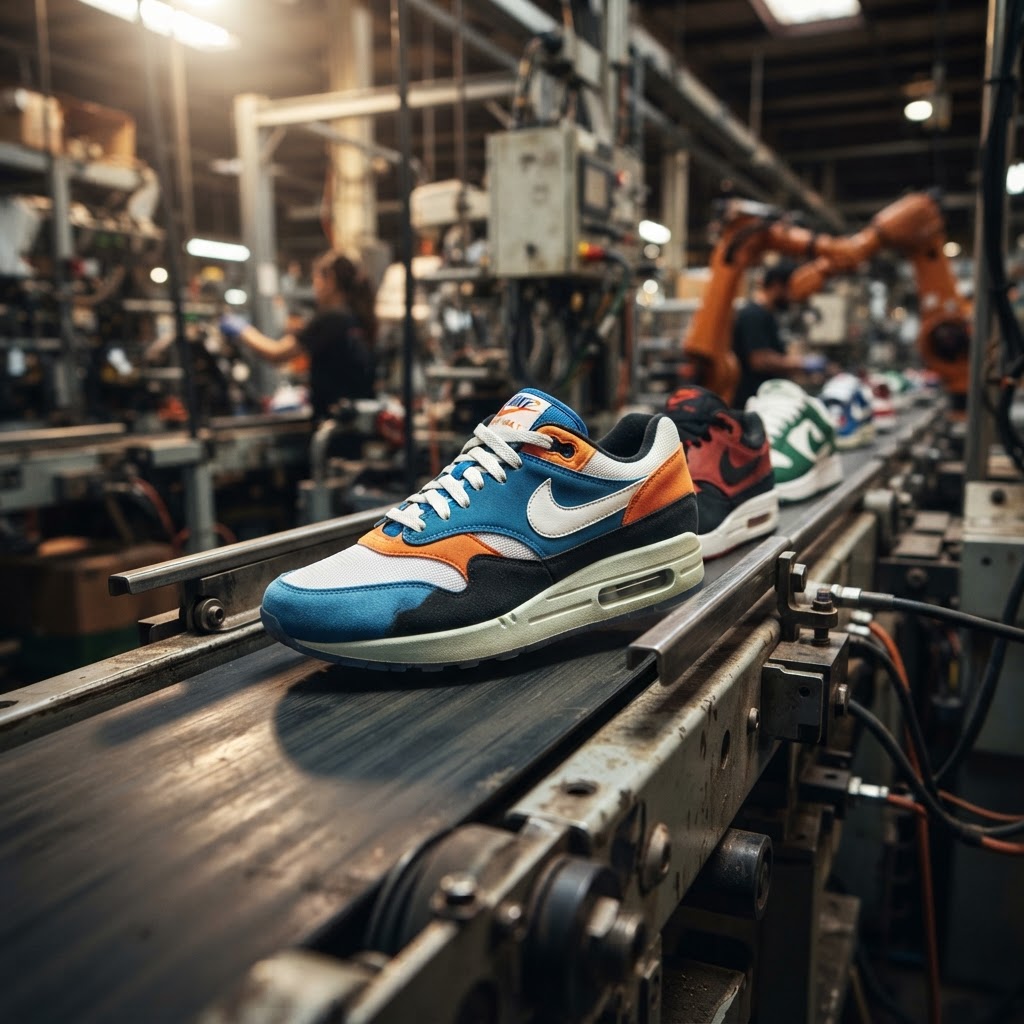
Nike sources footwear from over 120 factories across more than 12 countries, with Vietnam, Indonesia, and China representing the largest shares of production volume. In fiscal 2025, Nike produced approximately 900 million units of footwear, apparel, and equipment combined, with footwear dominating that output by volume and margin.

The company has been aggressively pursuing a Direct-to-Consumer (DTC) strategy, which now accounts for roughly 44 percent of total revenue. This shift places enormous pressure on manufacturing speed and customization capability. Factories must respond to demand signals faster than ever, compressing lead times from months to weeks.

Nike invested over $1.1 billion in capital expenditures in fiscal 2025, a significant portion directed toward supply chain modernization, automation integration, and materials research. These are not incremental improvements. They represent a structural rethinking of what a shoe factory should do and how it should operate.

The company has also reduced its overall vendor count by nearly 20 percent over the past two years as part of a strategic consolidation. Fewer, deeper partnerships with high-performing factories allow Nike to implement automation standards and quality control protocols more consistently across its global network.

Nike Forward and Air Sole Innovation: Automation at the Material Level

Nike Forward is one of the most significant manufacturing departures in the company's history. Unlike traditional footwear construction, which relies on weaving, knitting, and gluing multiple layers together, Nike Forward uses a needle-punching process that bonds recycled polyester fibers directly into a cohesive material. This process eliminates several assembly steps entirely.

The Nike Forward material requires approximately 75 percent less energy to produce compared to traditional knit uppers. That number is not a marketing claim. It reflects genuine process compression: fewer machines in sequence, less thermal energy consumption, and reduced adhesive use across the production line.

For a company manufacturing at nine-figure unit volumes, that efficiency gain translates into hundreds of millions of dollars in long-term cost reduction.

On the sole side, Nike's Air technology has evolved significantly. The latest generation of Air Max and Air sole units uses precision pressurized nitrogen encapsulation with robotic injection molding cells that operate at tolerances previously impossible without advanced sensor feedback systems. Each Air unit is pressure-tested via automated quality inspection before it ever reaches an assembly line worker.

Nike has also integrated generative design software into its midsole development process. Using computational modeling, Nike engineers can simulate millions of geometry variations for Air sole cushioning chambers and select optimal configurations for specific athlete load profiles. This reduces physical prototype cycles by an estimated 60 percent, compressing development timelines from 18 months to under 7 months for new sole platforms.

For any industrial company spending heavily on R&D tooling and prototyping, this approach to digital-first design iteration is directly transferable.

What Industrial and Manufacturing Companies Can Learn from Nike's Playbook

Nike's approach offers three distinct lessons for B2B manufacturing leaders. The first is process elimination over process optimization. Rather than making existing assembly steps faster, Nike Forward removed entire steps from the production chain.

Industrial companies often optimize within existing frameworks when the greater opportunity lies in questioning whether those frameworks should exist at all.

The second lesson is the value of material science as a competitive moat. Nike invests heavily in the Nike Sports Research Lab and maintains partnerships with universities and material suppliers to stay ahead of conventional manufacturing inputs. Industrial companies that treat raw materials as commodities cede differentiation to competitors willing to invest in advanced materials research.

The third lesson concerns data integration across the supply chain. Nike's manufacturing partners are increasingly required to adopt digital reporting systems that feed real-time production data back to Nike's central operations teams. This visibility enables faster defect detection, more accurate demand forecasting, and tighter inventory management.

Companies that treat their supplier relationships as transactional rather than data-sharing partnerships are leaving significant operational value on the table.

If your organization is evaluating where to invest in manufacturing modernization, Nike's model suggests starting with material inputs and process architecture before layering in automation hardware. Automating a flawed process at high speed only accelerates inefficiency. Redesigning the process first, as Nike did with Forward, creates a foundation where automation delivers compounding returns.

Connect with an industrial automation strategist today to map your own process elimination opportunities.

The Capacity Imperative — CNC machining cover
Free Industry Report

The Capacity Imperative

U.S. Advanced Manufacturing in 2027

The Road Ahead: Localized Manufacturing, Digital Twins, and the Next Air Platform

Nike has publicly signaled its intention to expand nearshore manufacturing capabilities in North America and Europe to reduce geopolitical supply chain risk. As of 2025, Nike is working with select manufacturing partners in Mexico and exploring re-shoring feasibility studies for specific high-margin product categories. This shift toward regional production nodes will require those factories to be significantly more automated than traditional offshore facilities, given higher labor costs.

Digital twin technology is becoming central to Nike's factory planning process. By building virtual replicas of production lines, Nike can simulate new product introductions, identify bottlenecks before they occur, and test layout changes without halting physical production. Several of Nike's key contract manufacturers in Vietnam have already implemented digital twin systems with Nike's technical support and investment.

The next generation Air sole platform, currently in advanced development stages based on patent filings reviewed through early 2026, points toward fully closed-loop recyclable Air units. This would allow Nike to reclaim and re-pressurize used sole components, fundamentally changing the end-of-life economics of footwear manufacturing. The implications for industrial circular economy models are significant.

For manufacturing executives watching these developments, the strategic implication is clear: the factories that will thrive in the next decade are those that embed intelligence, data, and adaptability into their physical infrastructure now. Nike is not waiting for the technology to mature. It is building the capability while the technology evolves alongside it.

Key Takeaways

  • Nike generated over $51 billion in fiscal 2025 revenue, with footwear manufacturing automation playing a central role in protecting margins under DTC pricing pressure.
  • Nike Forward reduces energy consumption in upper production by approximately 75 percent compared to traditional knit construction methods.
  • Nike invested over $1.1 billion in capital expenditures in fiscal 2025, with material portions directed toward supply chain automation and materials innovation.
  • Generative design integration in sole development has reduced Nike's physical prototype cycles by an estimated 60 percent, cutting development timelines from 18 months to under 7 months.

Key Quotes

"We are not just designing products. We are designing the systems that make those products possible at scale." -- John Donahoe, Former President and CEO, Nike Inc.

"Innovation in manufacturing is no longer optional. It is the difference between being a brand that grows and one that fades." -- Heidi O'Neill, President of Consumer and Marketplace, Nike Inc.

References

The Capacity Imperative — CNC machining cover
Free Industry Report

The Capacity Imperative

U.S. Advanced Manufacturing in 2027

Newsletter

Stay in the loop

Get the latest insights on manufacturing marketing, industrial trends, and growth strategies delivered to your inbox.

We'll send you industry insights and manufacturing trends. No spam, unsubscribe anytime.

A massive modern industrial robot arm in a sleek manufacturing facility
Manufacturing Ultra

Marketing for the industrial economy. We help manufacturers, suppliers, and event organizers grow with modern, data-driven programs.

Explore

© 2026 Manufacturing Ultra. All rights reserved.