The Reinvention Happening on the Factory Floor
General Motors is not quietly transitioning to electric vehicles. It is executing one of the most ambitious manufacturing overhauls in American industrial history. At the center of this transformation are two interconnected bets: the Ultium battery platform and Factory ZERO in Detroit-Hamtramck, Michigan.
For B2B buyers, suppliers, and industrial operators, GM's approach offers a rare live case study in how legacy manufacturers can retool at scale without losing production momentum. The decisions GM is making today about platform architecture, supplier integration, and factory automation will shape competitive benchmarks across the broader manufacturing sector.
This report breaks down what GM is actually building, how it is building it, and what the strategic lessons mean for industrial companies navigating their own transformation pressures in 2025 and 2026.
Factory ZERO and the Scope of GM's EV Production Network
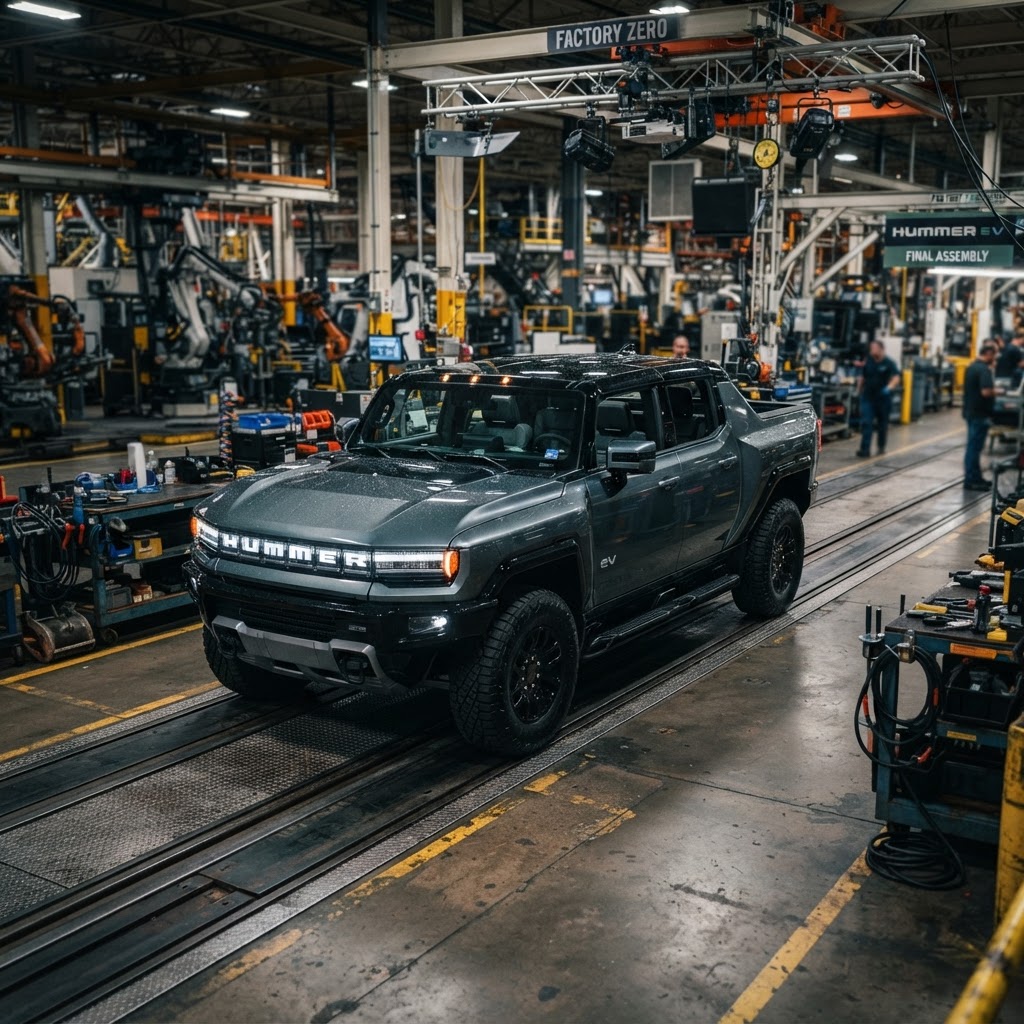
Factory ZERO represents GM's flagship commitment to electric vehicle assembly. The plant, which covers approximately 3.3 million square feet, produces the GMC Hummer EV, the Chevrolet Silverado EV, and the GMC Sierra EV. GM invested over 2.2 billion dollars in converting and upgrading the facility, making it one of the largest single manufacturing investments in the company's recent history.
Beyond Factory ZERO, GM's North American EV production network includes the Spring Hill Manufacturing plant in Tennessee and the Orion Assembly plant in Michigan, both of which have received multi-billion-dollar investment commitments. GM's total planned investment in electric and autonomous vehicles reached 35 billion dollars through 2025, a figure that signals the scale of the infrastructure being built rather than just the vehicles being sold.
In 2024, GM reported global EV deliveries exceeding 300,000 units, with North American volumes accelerating in the second half of the year as production efficiencies improved. The company achieved a significant reduction in battery cell costs as Ultium Cells LLC, the joint venture with LG Energy Solution, ramped production at its Ohio and Tennessee gigafactories.
The Ultium Cells Ohio facility in Warren produces battery cells at a capacity target of 50 gigawatt-hours annually. The Tennessee plant adds further capacity to support GM's expanded truck and SUV EV lineup. This vertically integrated battery supply chain is a direct response to the supplier vulnerabilities that exposed automakers during the 2024 component shortages.
Ultium Platform Architecture and the Technology Behind the Scale
The Ultium platform is not a single battery pack. It is a modular architecture that allows GM to configure pouch-format battery cells in horizontal or vertical orientations, enabling the same core technology to power vehicles ranging from compact crossovers to full-size commercial trucks. This flexibility reduces tooling costs across programs and shortens development cycles for new models.
Ultium battery packs in 2025 configurations offer energy capacities ranging from approximately 85 kilowatt-hours to over 200 kilowatt-hours depending on the application. The system supports 800-volt charging architecture on select platforms, enabling DC fast charging rates that bring competitive parity with other premium EV manufacturers. GM's engineering teams have also integrated vehicle-to-grid capability into newer Ultium variants, expanding the platform's commercial utility fleet appeal.
On the factory floor, Ultium-based assembly has driven significant automation investment. Factory ZERO deployed over 800 new robotic systems during its conversion, including collaborative robots handling battery module installation and high-precision vision systems for electrical connection verification. GM reported a reduction in assembly defect rates on Ultium-based vehicles compared to legacy ICE platform benchmarks, attributing the improvement to standardized cell formats and automated torque verification systems.
GM's software-defined vehicle strategy layers directly onto the Ultium hardware platform. The Ultifi software platform, which manages over-the-air updates and feature unlocks, is designed to extend revenue generation beyond the point of sale. For industrial buyers evaluating GM fleet products, this means vehicles can receive safety and performance updates without dealer intervention, reducing total cost of ownership over multi-year fleet contracts.
What Industrial and B2B Companies Can Learn From GM's Platform Strategy
GM's most transferable lesson is the power of platform thinking over product-by-product development. By investing heavily in a shared architecture, GM reduced per-unit engineering costs while dramatically expanding the number of models it can bring to market. Industrial manufacturers building equipment families or component lines can apply the same logic: shared subsystems, standardized interfaces, and modular configurations compress both cost and time-to-market.
Supplier integration is the second major lesson. GM embedded Ultium Cells LLC as a dedicated joint venture rather than relying on spot-market battery procurement. This mirrors the integrated supplier strategies used by industrial leaders in aerospace, heavy equipment, and precision manufacturing.
Companies that co-invest with critical suppliers gain pricing stability, quality control, and preferential capacity access, all of which become competitive advantages during supply disruptions.
GM's investment in workforce upskilling at Factory ZERO also carries lessons for industrial operators. The company partnered with community colleges and technical training providers across Michigan and Ohio to prepare workers for EV-specific assembly tasks, including high-voltage battery handling and advanced robotics supervision. Companies that treat workforce development as a capital investment rather than an operating expense consistently report lower defect rates and faster ramp times on new production programs.
For B2B marketers specifically, GM's approach to communicating the Ultium platform demonstrates the value of leading with architecture rather than individual products. Industrial companies that can articulate a cohesive platform story to procurement teams and fleet buyers build credibility that individual product launches rarely achieve. If your company is navigating a similar product portfolio transformation, now is the time to audit how your platform narrative is reaching key decision-makers in your target accounts.
The Road Ahead: Strategic Implications for 2026 and Beyond
GM's 2025 annual report signaled continued investment in Ultium platform evolution, with next-generation cell chemistry improvements targeting a 20 percent reduction in battery cost per kilowatt-hour by 2026. This trajectory has direct implications for commercial fleet pricing, making GM's EV trucks increasingly competitive with diesel alternatives on a total cost of ownership basis across five-year fleet cycles.
The company is also expanding its BrightDrop commercial EV division and its relationship with large fleet operators in logistics, utilities, and municipal services. These segments represent significant B2B revenue streams that did not exist at meaningful scale in GM's revenue mix before 2024. As these segments mature, GM's manufacturing scale becomes a procurement advantage for large buyers seeking supply consistency and service network depth.
Factory ZERO and the broader Ultium production network will face continued pressure from offshore EV manufacturers with lower labor cost structures. GM's response has centered on automation density, software integration, and domestic supply chain depth supported in part by Inflation Reduction Act manufacturing incentives. The company received substantial tax credits in 2024 and 2025 tied to domestic battery production, partially offsetting the cost gap with imported alternatives.
The broader industrial takeaway is that the companies shaping the next manufacturing era are not waiting for market conditions to stabilize. They are investing in platform infrastructure, supplier partnerships, and workforce capability now, accepting near-term cost pressure in exchange for long-term structural advantage. Industrial leaders who benchmark against GM's transformation pace will find both urgency and a replicable playbook worth studying closely.
Key Takeaways
- GM invested over 2.2 billion dollars in Factory ZERO, converting it into a dedicated EV assembly facility producing Hummer EV, Silverado EV, and Sierra EV models
- GM's total planned EV and autonomous vehicle investment reached 35 billion dollars through 2025, establishing one of the largest manufacturing infrastructure commitments in the automotive sector
- The Ultium Cells Ohio gigafactory targets 50 gigawatt-hours of annual battery cell production capacity, supporting GM's goal of over 300,000 EV deliveries achieved in 2024
- GM deployed over 800 new robotic systems at Factory ZERO during its conversion, driving measurable reductions in assembly defect rates on Ultium-based vehicles
Key Quotes
"We have the products, the technology, and the manufacturing scale to win in EVs, and Ultium is the foundation that makes all of it possible." — Mary Barra, Chair and CEO of General Motors
"Factory ZERO is a symbol of what American manufacturing can be: modern, flexible, and built for the future of transportation." — Gerald Johnson, Executive Vice President of Global Manufacturing, General Motors
References
- General Motors Investor Relations — official source for GM annual reports, EV production data, and Ultium investment disclosures
- Ultium Cells LLC Joint Venture Overview — GM's coverage of the LG Energy Solution partnership and gigafactory production ramp
- U.S. Department of Energy Advanced Manufacturing Office — federal data on domestic battery manufacturing investment and IRA tax credit programs supporting EV production